Creative · August 18, 2026 · 6 min read
Creative AI: How an Art Director Actually Uses It
A practical creative AI workflow for art directors: where generative tools help, where craft still wins, and how to keep a brand's voice intact.

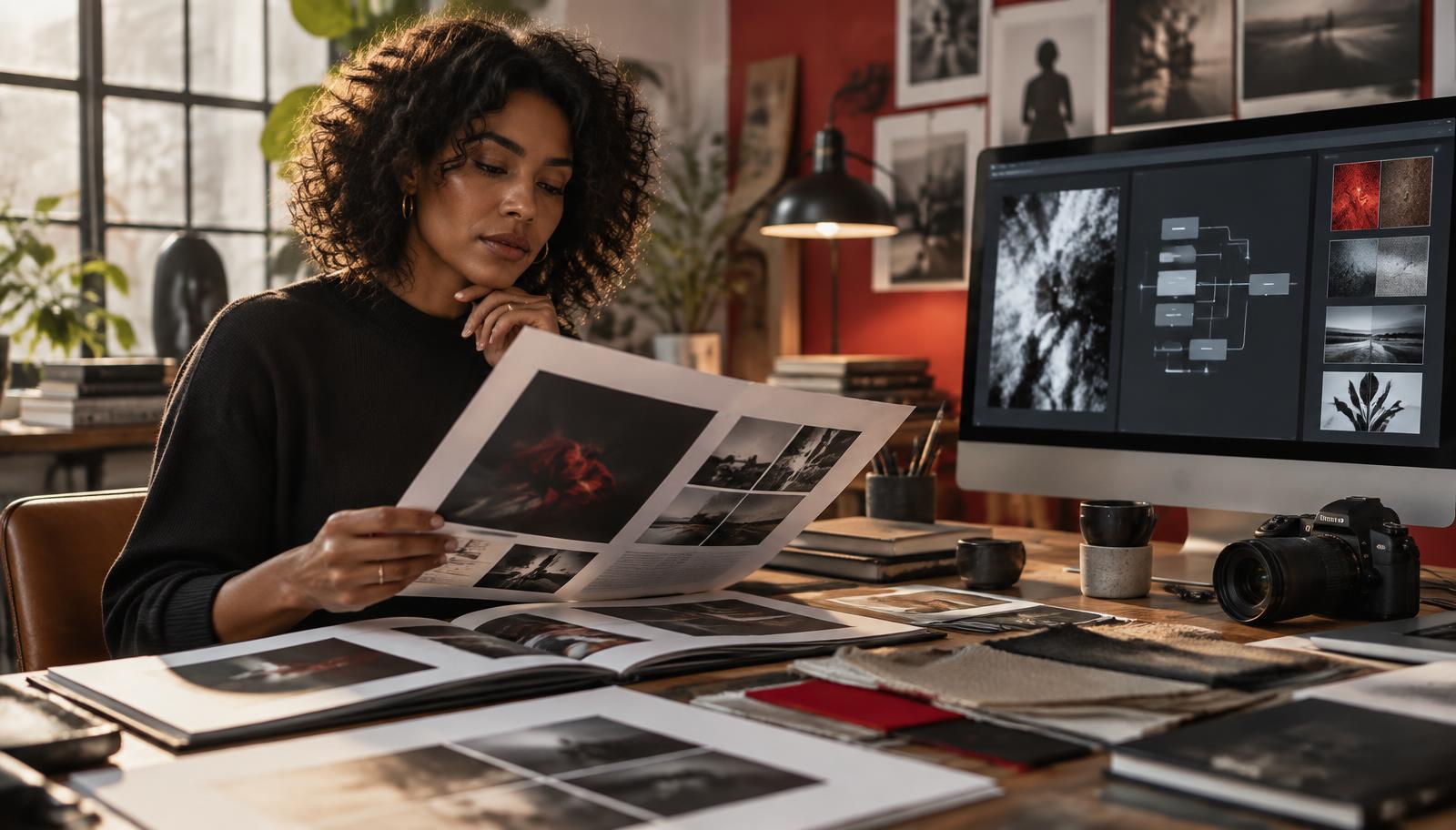
Creative AI is not a shortcut to good work. It is a new set of instruments in an old orchestra. The brief, the strategy, the taste and the edit still belong to a human. What changes is how fast an idea can travel from a sentence to something you can look at, react to and reject.
Start with the idea, not with the prompt
The most common mistake I see is teams opening a model before they open a document. Generative tools amplify whatever direction you give them, including a vague one. I write the concept first: who is this for, what feeling should it produce in three seconds, what visual codes belong to the category and which ones we intend to break. Only then do I translate that into prompts, references and control images.
A workflow that survives client feedback
- Concept board: written positioning, tone words, and three visual territories.
- Fast exploration: 30 to 60 generated frames per territory, judged in ten minutes.
- Selection: pick five frames that carry the idea, not the five prettiest ones.
- Craft pass: retouch, relight, recompose and typeset by hand until it looks intentional.
- Consistency pass: rebuild key assets with the same lighting, lens and palette so the campaign reads as one system.
Where AI earns its place
Concept visualisation, moodboards, product context shots, background extensions, variations for A/B testing and localisation are all places where generative tools remove weeks of production. Presenting a fully rendered idea early also changes the conversation with clients: they approve a direction they can see, not a paragraph they have to imagine.
Where craft still wins
Typography, layout hierarchy, brand architecture, editing rhythm and the decision of what to leave out. Models are very good at producing plausible images and very bad at knowing which one matters. That judgement is the job.
AI multiplies output. Direction is what makes output worth looking at.
Build a repeatable system
Save your prompts, seeds, LoRAs, reference sets and colour targets like you would save a brand guideline. A creative AI pipeline is only valuable when a second person can run it and get the same look. Document it, version it and treat it as part of the brand's toolkit.
Work with me
I help brands turn creative AI into campaigns, packaging and films that actually perform.
Let's talk